An Honest Review of 222 (2026)
Most social apps give you a match and leave the rest to you. Figure out where to go. Agree on a time. Hope nobody flakes. 222 takes the opposite approach: you take a personality quiz, the app picks your group, plans the entire evening, and tells you where to be. Dinner, drinks, maybe a second spot. All you do is walk in the door.
I've done three 222 experiences in New York over the last couple months. Two were great. One was just okay. Here's the full breakdown.

How It Works
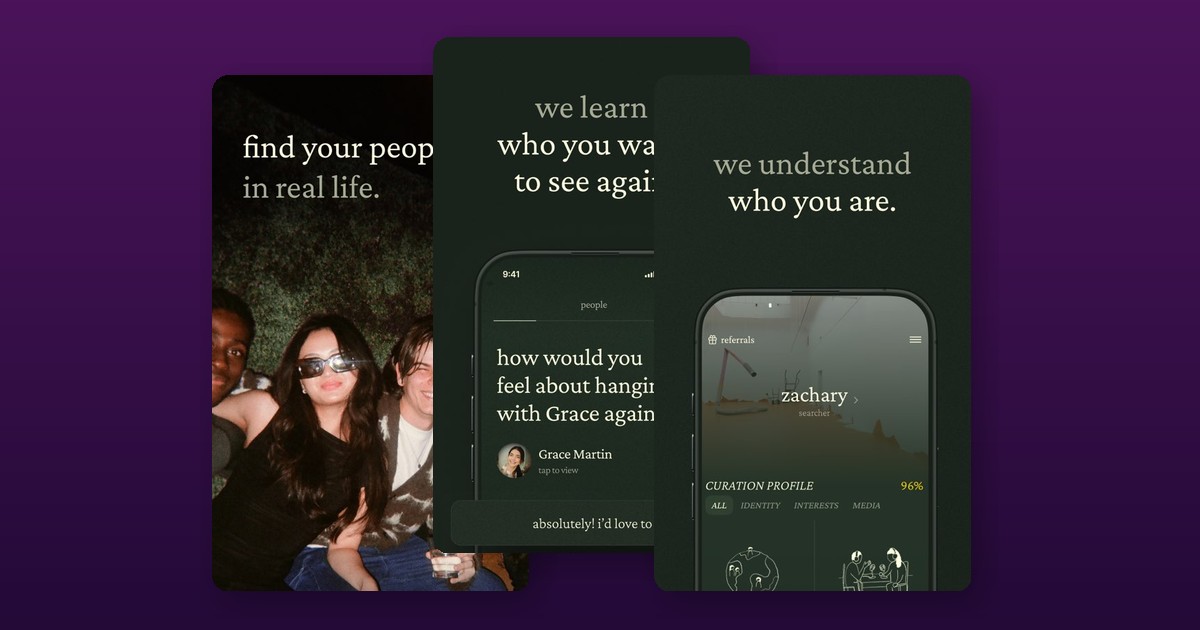
When you download 222, the first thing it asks you to do is fill out a personality quiz. It's long. Not "pick three interests" long, but "answer 40 questions about your values, social style, and what kind of night you're looking for" long. They use this to build what they call a curation profile, which determines both who you get grouped with and what kind of experience you're invited to.
Once your profile is set, you wait for an invite. When one pops up, it'll say something like "Friday, 8 PM, dinner and drinks in the West Village, 6 people." You accept, pay the event fee (usually $30-60), and that's it. On the night of, you get the venue name and show up.
There are no profiles to browse. No DMs. No swiping. You can't see who else is going until you're standing in front of them.
What I Liked
The full-evening format is a game changer
This is what separates 222 from everything else I've tried. It's not just dinner. My first experience started at a restaurant in Nolita, moved to a cocktail bar two blocks away, and ended at a dessert spot. The transitions felt natural because the whole route was planned in advance. Having a second and third location gives the night momentum. People who might have left after dinner stuck around because the next place was already decided.
The matching was surprisingly good
Two out of three times, my group clicked immediately. The first time, I was with four other people who all turned out to be in creative fields, all relatively new to New York, all in their mid-to-late twenties. The conversation was easy. We talked about projects we were working on, neighborhoods we'd lived in, restaurants we'd tried. By the second stop, it felt like catching up with friends rather than meeting strangers.
I think the lengthy personality quiz is why. Most apps ask surface-level questions. 222 goes deeper, and you can feel it in the results.
The venue curation
Every restaurant and bar I went to through 222 was somewhere I'd actually want to go on my own. No chain restaurants. No tourist traps. The spots felt handpicked, and a few of them were places I'd never heard of but have since gone back to on my own. Whoever is picking the venues has good taste, and that matters more than you'd think. A mediocre restaurant can tank an otherwise good group.

What I Didn't Like
The price adds up
Each experience costs $30-60 on top of whatever you spend on food and drinks. My first night out through 222 cost me about $120 total. That's not outrageous for a full evening in New York, but it's a lot to spend on an experiment with strangers. If the group doesn't click, you've just dropped $100+ on an awkward night. Compare that to Timeleft, where the subscription is $13/month and you just pay for your own meal.
iOS only
If you have an Android phone, 222 doesn't exist for you. In 2026, that's a real limitation. I know at least two people who wanted to try it after hearing about my experience but couldn't because they're on Android. For an app that relies on group size and density, shutting out half the smartphone market seems like a strategic mistake.
My third experience was flat
I want to be honest about this because the first two were good enough that I might have oversold it. My third 222 night had a group where the energy just wasn't there. Two people were quiet, one person dominated the conversation, and by the second venue half the group was checking their phones. The algorithm doesn't always nail it. When it misses, you're stuck for an entire evening with people you wouldn't have chosen to spend time with, and that's the trade-off of removing choice from the equation.
Who Should Try 222
If you're in New York, LA, SF, Chicago, Austin, Boston, or Toronto and you want someone else to plan your social life for you, 222 is the best option out there. It's ideal for people who have the budget for a night out and want something more curated than a standard dinner app. It's also great for people who are new to a city and don't know which restaurants and bars are worth going to.
It's less ideal if you're watching your spending, if you're on Android, or if you want to control who you meet. The algorithm gives and the algorithm takes away.

The Verdict
222 is the most ambitious app in this space. While most competitors stop at "we'll match you with strangers for dinner," 222 plans the whole night, picks the venues, and tries to assemble a group that will actually get along. When it works, it's the best social app experience I've had. When it doesn't, it's an expensive reminder that algorithms have limits.
I'll keep using it. But I go in knowing that not every night will be magic, and the price of admission means the stakes feel higher than they probably should.